
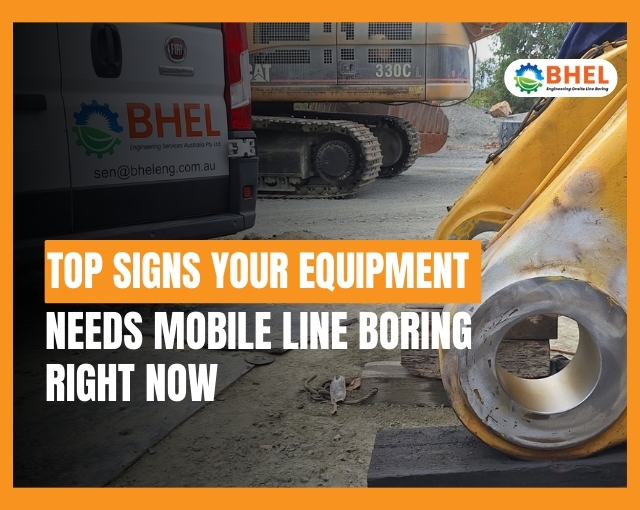
Heavy machinery is built to last, but even the toughest equipment shows wear over time. Bushes, pins, and bores slowly lose their original shape due to friction, vibration, and load stress. When this happens, performance drops and breakdown risks rise.
This is where mobile line boring becomes essential. It is a precision machining process performed directly on-site to restore worn or misaligned holes to their original specifications. Instead of dismantling and transporting massive components, repairs happen right where your machine is working.
At BHEL Engineering, we’ve seen many cases where early intervention saved equipment from major structural damage and costly downtime. Recognising the warning signs early is the smartest way to protect your investment.
What Is Mobile Line Boring?
Mobile line boring is an on-site machining method that repairs worn, oval, or misaligned bores in heavy machinery. It ensures that new bushes and pins fit correctly and that loads are distributed evenly.
It is commonly used for:
- Excavators
- Loaders
- Cranes
- Earthmoving equipment
- Industrial machinery frames
When done correctly, mobile line boring restores factory-level accuracy and extends machine life.
Why Early Detection Matters
Ignoring early signs of bore wear can lead to:
- Structural cracking
- Excess vibration
- Rapid component failure
- Unsafe operating conditions
- Higher repair costs later
From our real-world experience, machines that receive mobile line boring early often avoid complete rebuilds and stay operational for years longer.
Top Signs Your Equipment Needs Mobile Line Boring
1. Loose or Moving Pins
If pins shift during operation, the bore may be oversized or oval-shaped. This movement increases impact stress and accelerates wear.
Loose pins are one of the earliest indicators that mobile line boring may be required.
2. Uneven or Oval Shaped Bores
When bushes wear unevenly, holes lose their circular shape. This leads to:
- Poor bush seating
- Load imbalance
- Rapid pin damage
Line boring restores perfect roundness and alignment.
3. Excessive Vibration or Noise
Abnormal vibration often comes from misalignment or uneven bore surfaces. These forces transfer into surrounding components and cause chain failures.
4. Rapid Bush or Bearing Failure
If new bushes fail quickly, the issue is usually not the part quality it’s the bore condition.
Before installing replacements, the bore must be restored using mobile line boring.
5. Visible Cracks Around Mounting Points
Cracks often form due to stress concentration from worn holes. Repairing the bore prevents further structural damage.
6. Misalignment of Moving Parts
When attachments don’t track straight or sit evenly, alignment problems may exist in the bore geometry.
Line boring realigns components to their original working axis.
7. Irregular Wear Patterns on Pins
Pins that show tapered or uneven wear usually indicate bore distortion.
8. Reduced Machine Precision
If your equipment feels “loose” or unstable during operation, bore wear may be affecting control and load accuracy.
How Mobile Line Boring Solves These Problems
Mobile line boring:
- Restores bore geometry
- Ensures perfect alignment
- Improves load distribution
- Prevents repeated component failure
- Extends equipment lifespan
It is one of the most cost effective structural repair methods in heavy machinery maintenance.
Real World Insight from BHEL Engineering
In one project, a machine experienced repeated pin and bush failures every few months. Replacement parts were installed, but the problem kept returning.
When our engineers inspected the bore alignment, it was found to be significantly oval and off-axis. After performing mobile line boring, new bushes were fitted correctly, and the machine ran reliably without repeat failures.
This shows that structural accuracy matters more than frequent part replacement.
Supporting Repairs and On-Site Solutions
Bore wear often goes hand in hand with other mechanical stress points. Sometimes welding repairs are needed before boring can be done.
You can explore related insights in our blog on welding equipment problems
And when breakdowns occur unexpectedly, fast on-site support becomes critical. Our mobile response solutions help minimise downtime:
These services work together with mobile line boring to deliver complete equipment recovery.
Benefits of Choosing On-Site Line Boring
- No transport costs
- Faster turnaround
- Reduced downtime
- Precision accuracy
- Safe, controlled machining
- Longer machine service life
Conclusion
Mobile line boring is not just a repair it is a precision restoration method that protects your machinery and saves long term costs.
Key Takeaways:
- Early bore damage detection prevents major failures
- Mobile line boring restores alignment and accuracy
- It extends component and machine life
- On-site repairs reduce downtime and expenses
If your equipment shows any of these warning signs, don’t wait for a breakdown.
Contact BHEL Engineering today for expert mobile line boring and on-site precision repair services that restore strength, accuracy, and reliability to your machinery.