
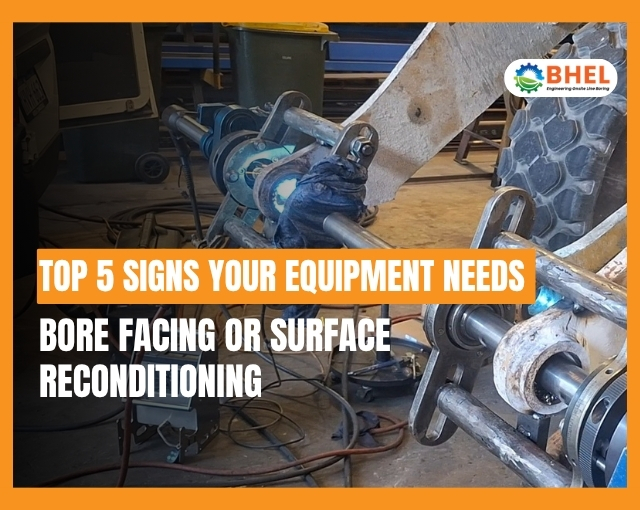
Heavy machinery is the backbone of mining, construction, and industrial projects. Over time, components like pivot points, flanges, and mounting faces can wear down, causing inefficiencies, misalignment, or even costly breakdowns. Regular bore facing and surface reconditioning helps restore worn machinery surfaces, ensuring smooth operation and reducing costly downtime.
Bore facing, also known as surface reconditioning, is a critical process that restores worn surfaces to their original flatness and alignment. But how do you know when your equipment truly needs it? Here are the five key signs to watch for.
1. Misaligned Components Affecting Performance
If your machine parts don’t move smoothly or assemblies feel off-balance, misalignment is often the culprit. Worn flanges or pivot points can shift over time, causing uneven load distribution.
Why it matters: Misalignment not only affects productivity but also accelerates wear on connected parts. Bore facing corrects this, ensuring smoother, more reliable operation.
2. Visible Surface Wear or Damage
Cracks, scoring, or uneven surfaces on flanges or bosses are a clear indicator that reconditioning is required. These imperfections compromise how components fit together, which can lead to equipment failure.
Action: Surface reconditioning restores flatness and smoothness, making sure your parts fit correctly and operate safely.
3. Excessive Vibration During Operation
Vibrations or wobbling during normal machine operation often signal uneven or worn surfaces. Even minor inconsistencies in pivot points or mounting faces can lead to instability.
Benefit of bore facing: Restoring flat, precise surfaces reduces vibration, protecting both the machine and its operator from unnecessary wear and risk.
4. Difficulty Fitting New Components
If replacing bushes, bearings, or pins becomes difficult — requiring extra force or adjustments — your surfaces might be uneven or worn. Proper fit is essential for optimal machine performance.
Solution: Bore facing ensures that all mating surfaces are correctly aligned, making installations straightforward and reliable.
5. Premature Wear on Connected Parts
Frequent replacement of pins, bushes, or bearings is a red flag. Worn surfaces can increase friction, misalign loads, and cause connected parts to fail sooner than expected.
How bore facing helps: Reconditioning the surface extends the life of these components, saving time and money on recurring maintenance.
Why On-Site Bore Facing is a Smart Choice
On-site bore facing allows repairs to happen directly at your worksite, reducing downtime and eliminating transport costs. Mobile machining teams can restore surfaces quickly, precisely, and safely — helping you get equipment back into operation faster. With expert on-site bore facing and surface reconditioning, BHEL Engineering keeps your heavy equipment performing efficiently across WA.
Advantages of On-Site Services:
- Minimise equipment downtime
- Restore original surface flatness and alignment
- Extend the life of critical components
- Combine bore facing with optional bush or bearing installation for full restoration
Takeaway
Ignoring worn surfaces can result in poor machine performance, costly repairs, and increased safety risks. By identifying these signs early and scheduling bore facing or surface reconditioning, you protect your equipment and maintain operational efficiency.
Pro Tip: Regular inspections of flanges, pivot points, and mounting faces can help catch wear before it leads to bigger problems.
Ready to Restore Your Machinery?
For fast, precise, on-site bore facing across Perth, Goldfields, Pilbara, and Newman, trust BHEL Engineering. Our mobile teams bring expertise, precision, and fully equipped workshops directly to your site.